

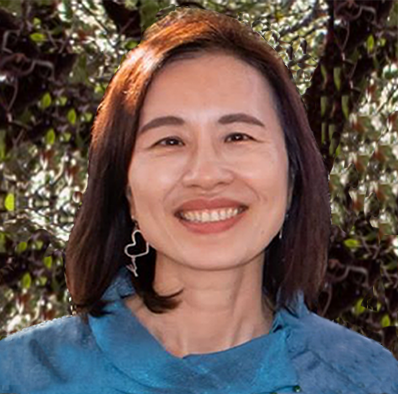
Lab Introduction & Major Research Interests
Trained as a vision scientist and psychologist, my research interests include vision, attention, consciousness, multisensory perception, emotion, word recognition, aging, blue light effect, statistical regularity, and applied research on image processing and display technology.
To what extent can unconscious processing go? To understand the processes under the conscious state and the unconscious state, we have used different techniques to block participants’ consciousness while keeping unconscious processing intact. These techniques include crowding, masking, inattentional blindness, repetition blindness, motion induced blindness, and continuous flash suppression, with behavioral and brain-imaging techniques such as EEG, ERP, MEG, and fMRI. Over the past years, we have found that texture segregation, objects, faces, gaze, words, numbers, and complex scenes can be processed without consciousness, and can even affect the emotional evaluation of stimuli that were associated with unconsciously perceived words (conditioning).
We are also interested in the relationship between emotion, perception, attention, working memory, and consciousness. Different kinds of attention are affected by different kinds of working memory: location-based attention is affected by spatial working memory while object-based attention is affected by non-spatial working memory. We also found that subliminal cue and suprathreshold cue lead to same or different attentional effects depending on the kind of attention involved (location-based or object-based). The subliminal cue and face cue have been used for selective image processing in applied research.
Multi-disciplinary research topics include perceptual video and image processing, portable eye-tracker and gaze contingent display, assistive robots for elderly people, and applications of blue effect.
Recent Representative Publication ( * corresponding author)
1. Tu, Y. C., Chien, S. E., & Yeh, S. L. (2020). Age-related differences in the uncanny valley effect. Gerontology, 66(4), 382-392.
2. Chu, L., Chen, H. W., Cheng, P. Y., Ho, P., Weng, I. T., Yang, P. L., Chien, S. E., Tu, Y. C., Yang, C. C., Wang, T. M., Fung, H. H., & Yeh, S. L.* (2019). Identifying features that enhance older adults’ acceptance of robots: A mixed methods study. Gerontology, 1-10.
3. Yang, P. L., Tsujimura, S. I., Matsumoto, A., Yamashita, W., & Yeh, S. L.* (2018). Subjective time expansion with increased stimulation of intrinsically photosensitive retinal ganglion cells. Scientific reports, 8(1), 11693.
4. Yang, Y. H., & Yeh, S. L. *(2018). Unconscious processing of facial expression as revealed by affective priming under continuous flash suppression. Psychonomic Bulletin & Review, 1-9.
5. Yeh, S. L.*, He, S., & Cavanagh, P. (2012). Semantic priming from crowded words. Psychological Science, 23(6), 608-616.
6. Lee, W. F., Huang, T. H., Yeh, S. L., & Chen, H. H. (2011). Learning-based prediction of visual attention for video signals. IEEE Transitions on Image Processing, 20(11), 3028-3038.